



Illinois is short 142,000 homes. In the past five years alone, new home listings in the state dropped 64 percent, and new construction permits fell 13 percent. Chicago rents are growing faster than almost any other city in the country, even as national rents fell. And for years, the state did basically nothing about it.
That just changed. In his State of the State address in February, Governor JB Pritzker unveiled the Building Up Illinois Developments plan, known as BUILD. It is the most comprehensive state-level housing reform package in the country right now, and every Democrat who cares about affordability should study it closely.
Pritzker’s diagnosis is simple: “The problem is clear, rent is too high, and home ownership is too far out of reach. The cause is clear, too. We are not building enough homes fast enough.” He is right. This is a supply problem. And BUILD goes after supply with a seriousness Illinois has never seen.
1. The Core Problem
Developer demand to build in Illinois is real. What stops them is a patchwork of local regulations, arbitrary permitting delays, irrational parking requirements, and zoning rules that effectively ban everything except single-family homes on most residential land in the state.
Illinois permits housing at nearly half the rate of the national average. Since 2015, the state has averaged 848 permitted units per month. The national average over that same period was 1,426. That is not a small gap. And it is not a gap explained by a lack of demand. It is a gap created by policy.
Illinois real estate researchers found that the municipal side of housing costs, zoning approvals, permit timelines, impact fees, and local taxes, accounts for nearly 50 percent of total project costs. That is not the cost of lumber or labor. That is the cost of bureaucracy. And it is a cost that can be entirely eliminated with different policy choices.
2. Reviving the Missing Middle
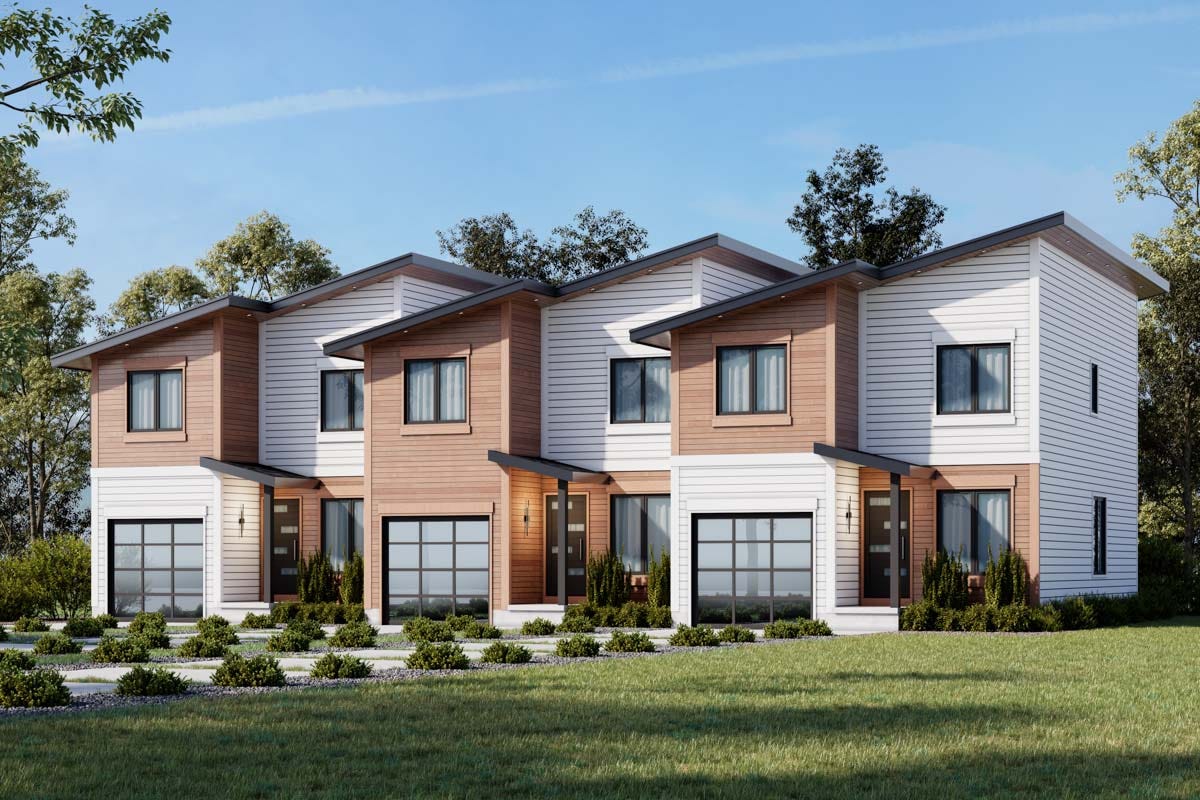
The first and most consequential piece of BUILD is statewide zoning preemption for missing middle housing. Under current law, most residential land in Illinois is zoned exclusively for single-family homes. Duplexes, triplexes, and four-plexes, the kind of modest, neighborhood-scale housing that filled American cities for a century before mid-century zoning rewrote the rules, are simply illegal to build on most lots. BUILD makes them legal everywhere, statewide, by right. Not by special permit. Not by variance. By right.
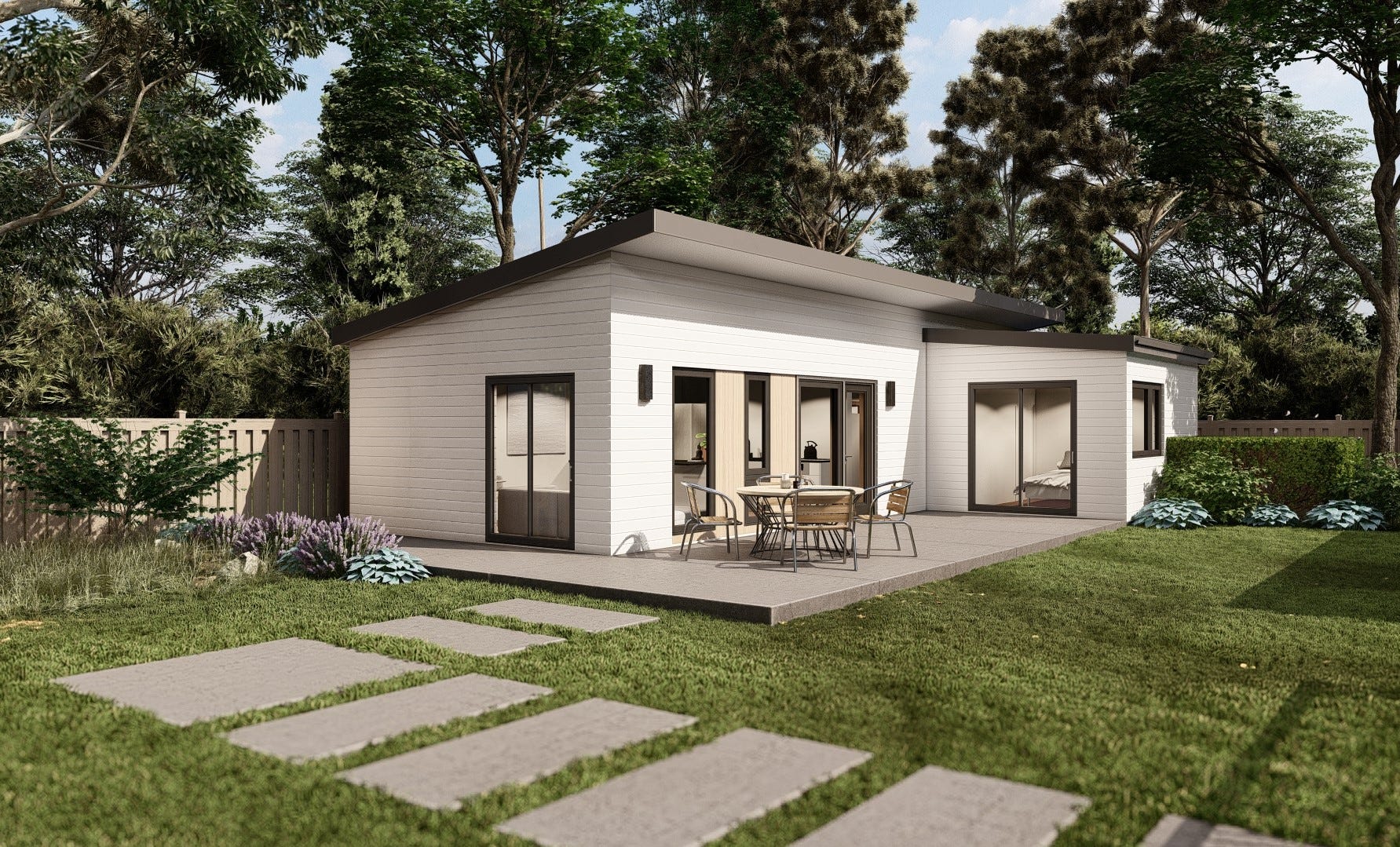
The second piece legalizes Accessory Dwelling Units (ADUs), granny flats, backyard cottages, and above-garage apartments on all residentially zoned properties across the state. Right now, even in Chicago, building one of these is nearly impossible in most neighborhoods. The BUILD plan ends that entirely. A homeowner who wants to add a unit, house an aging parent, or generate rental income to cover their mortgage could just do it. The ADU bill (SB 4071) also prohibits municipalities from imposing parking, size, or other restrictions on ADUs beyond what they impose on single-family homes.
The third piece eliminates irrational parking minimums. Developers would face far more sensible parking space requirements for new housing. This is not a small thing. Parking mandates force developers to build expensive underground or structured parking that adds thousands of dollars per unit in costs, all of which get passed directly to renters and buyers. Under BUILD, local governments could not require more than half a parking space per multifamily unit, or any parking at all for dwellings under 1,500 square feet.
All three of these reforms share the same logic: the state is overriding local rules that have, in practice, functioned as a veto on housing construction. Local governments retain their zoning classifications. They retain their discretion. They just lose the ability to use those rules to ban the kinds of housing Illinois desperately needs.
3. Cutting the Red Tape
Even when a project clears zoning, it can die in permitting. BUILD attacks this directly.
First, it standardizes permitting timelines statewide, giving developers clear and predictable deadlines for permit reviews and inspections. The open-ended waiting game, where a local department can sit on an application indefinitely, goes away.
Second, and this is the most important piece, if a local government misses its deadline, the developer can bring in a qualified third-party reviewer to sign off on the permit. That third party follows all applicable local and state standards.
Third, the plan standardizes impact fee practices across the state. Impact fees today vary wildly by municipality and are often unpredictable. Standardizing them gives developers the cost certainty they need to make projects pencil out, while still preserving local decision-making on how fees are set.
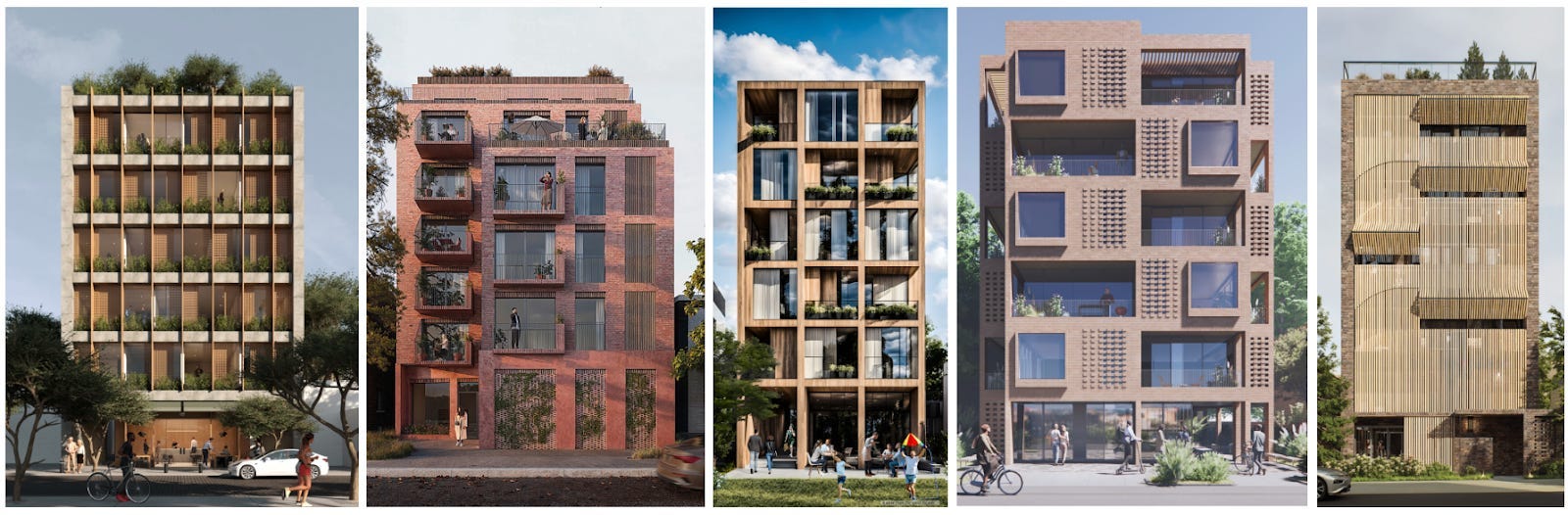
Fourth, the plan modernizes outdated building codes to maintain safety, free up space for more units, and reduce construction costs. One provision worth noting: allowing single stairways in smaller buildings up to six stories that meet other safety requirements. This is already common in Europe and a number of other states. It allows for more efficient floor plans and more units per building.
4. $250 Million to Back It All Up
The regulatory reforms are the core of BUILD. But Pritzker paired them with money, which matters for two reasons. It makes the overall package more politically durable, and it directly addresses the one somewhat reasonable critique of zoning reform, that new density can strain existing infrastructure.
$150 million goes through the Illinois Housing Development Authority: $100 million in capital funding for middle housing construction and $50 million in down payment assistance for first-time homebuyers. The other $100 million goes through the Department of Commerce and Economic Opportunity as capital grants to help municipalities cover upfront infrastructure costs, sewer improvements, stormwater systems, and site access, which block viable housing projects before they even get started.
That last piece is smart politics and smart policy. One of the reasons local governments resist density is the legitimate concern that their infrastructure was not built for it. BUILD gives municipalities money to fix that.
5. Why This Approach Works
The critics of supply-side housing reform always make the same argument: building more housing does not make it affordable. That argument has not survived contact with any city that actually tried it. The reason housing costs so much is that demand far outpaces supply, and local regulations make it almost impossible to close that gap. BUILD addresses every layer of the problem simultaneously.
By-right zoning for missing middle housing removes the political veto that neighborhood opposition currently holds over new construction. ADU legalization adds units without requiring new land, new infrastructure, or large-scale development. Parking minimum reduction cuts real per-unit construction costs. Permit timeline reform means that projects that clear zoning actually get built instead of dying in a queue. And slashing impact fees cuts direct production costs.
The BUILD plan is also modeled on similar state laws already passed in Oregon and Washington, two states where housing reform advocates have been further along in the fight. What Pritzker is doing is not novel in concept. It is only novel in scale and in the political will required to push it through a big, fragmented, home-rule state like Illinois.
6. The Path Forward and the Obstacles
The BUILD plan has real momentum. House Speaker Emanuel Welch told a room of real estate professionals in Springfield that “you cannot solve a housing shortage without building more houses,” and he has been publicly supportive. Pritzker has built an impressive coalition: housing advocates, the building industry, and the Illinois Realtors Association, which represents 50,000 members. A recent poll showed broad public support for each individual component of the plan when framed around affordability, starter homes, and keeping people in their communities.

The opposition is coming from local governments. The Illinois Municipal League called BUILD a broad preemption of local authority. Some suburban mayors held press conferences against it. A handful of Democratic legislators have been cautious, too, arguing that municipalities deserve more say.
This opposition deserves very little sympathy. Local governments created this crisis. For decades, they have used zoning power to ban apartments, block ADUs, drag out permitting, and effectively wall off their communities from the people who can no longer afford to live in them. The Illinois Municipal League is not defending local democracy. It is defending the right of local officials to say no to housing forever, consequences for everyone else be damned. Oregon called their bluff. Washington called their bluff. Rents went down. No neighborhood collapsed. The suburbs did not turn into Manhattan. They just got a little more housing.
Despite this, there is some real political vulnerability here. When voters were told the plan could mean more crowding, traffic, and strain on schools, 45 percent said they were less likely to support it. That is the message local officials will run with. It is also, to be blunt, the same message that has been used to block housing in every state, in every decade, for the past century. It is the message that got us here.
The most likely outcome is a negotiated version that preserves the core, by-right middle housing, ADU legalization, permit reform, while giving local governments some additional flexibility on implementation. Whether that compromise retains enough force to actually move the needle is the real question, and the answer depends entirely on how much Pritzker is willing to hold the line and how hard advocates are willing to push.
What is not in question is that JB Pritzker has already done more on this issue than nearly any Democratic Governor in the country. He is going all in on the exact kind of bold change Illinois needs. If BUILD passes in anything close to its current form, it will be the most significant state-level housing reform in the country.
If you live in Illinois, find your state representative and state senator here and email them today. Tell them you support the BUILD Plan. This is the best shot at real housing reform anywhere in the country right now. We can’t miss this opportunity.
JB > JD.