



With his poll numbers tanking and the cost of living squeezing voters, Trump has turned to gerrymandering as a lifeline, pressuring Republican state legislatures to redraw Congressional maps mid-decade to protect his House and Senate majorities. His approval rating has cratered to 35%, and Democrats now lead Republicans by 7 points on the generic ballot.
Trump can thank the Supreme Court for making this possible. In 2019, the Court ruled in Rucho v. Common Cause that partisan gerrymandering was a political question beyond their reach, handing full control of the mapmaking process to state legislatures with zero federal guardrails.
Republicans didn’t stumble into this advantage. For decades, dark money donors poured hundreds of millions into state legislative races to gain control over the maps. It worked. According to the Brennan Center, Republicans currently hold 16 additional seats they wouldn’t have without gerrymandering.
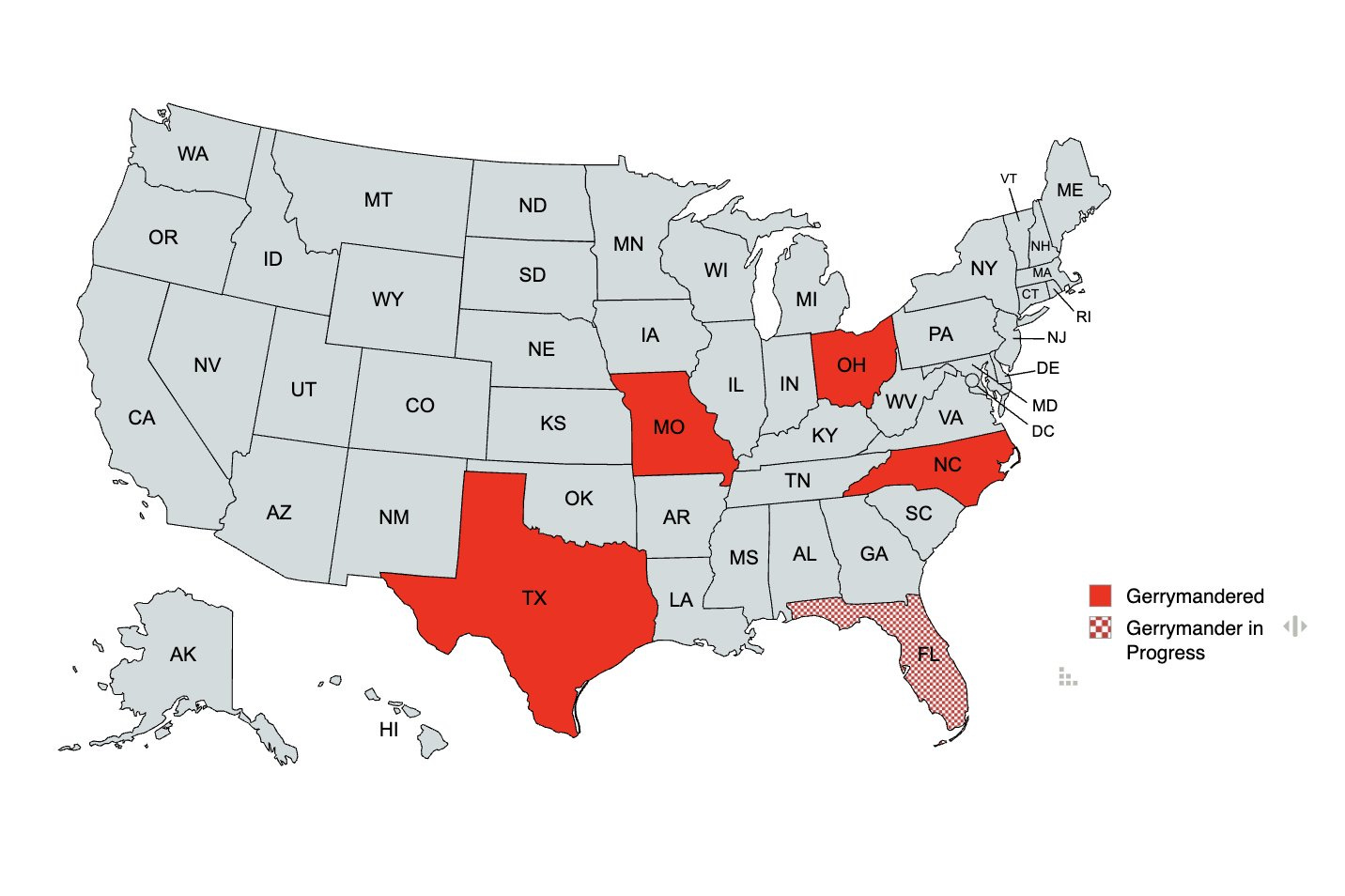
Now, Trump is trying to squeeze even more juice out of the Republican gerrymandering machine, pressuring Texas, Missouri, North Carolina, and Ohio to redraw their maps before the 2026 midterms. Thankfully, it’s already backfiring. Democrats pushed through redistricting measures in California and Virginia; now Democrats have gained more seats than Republicans.
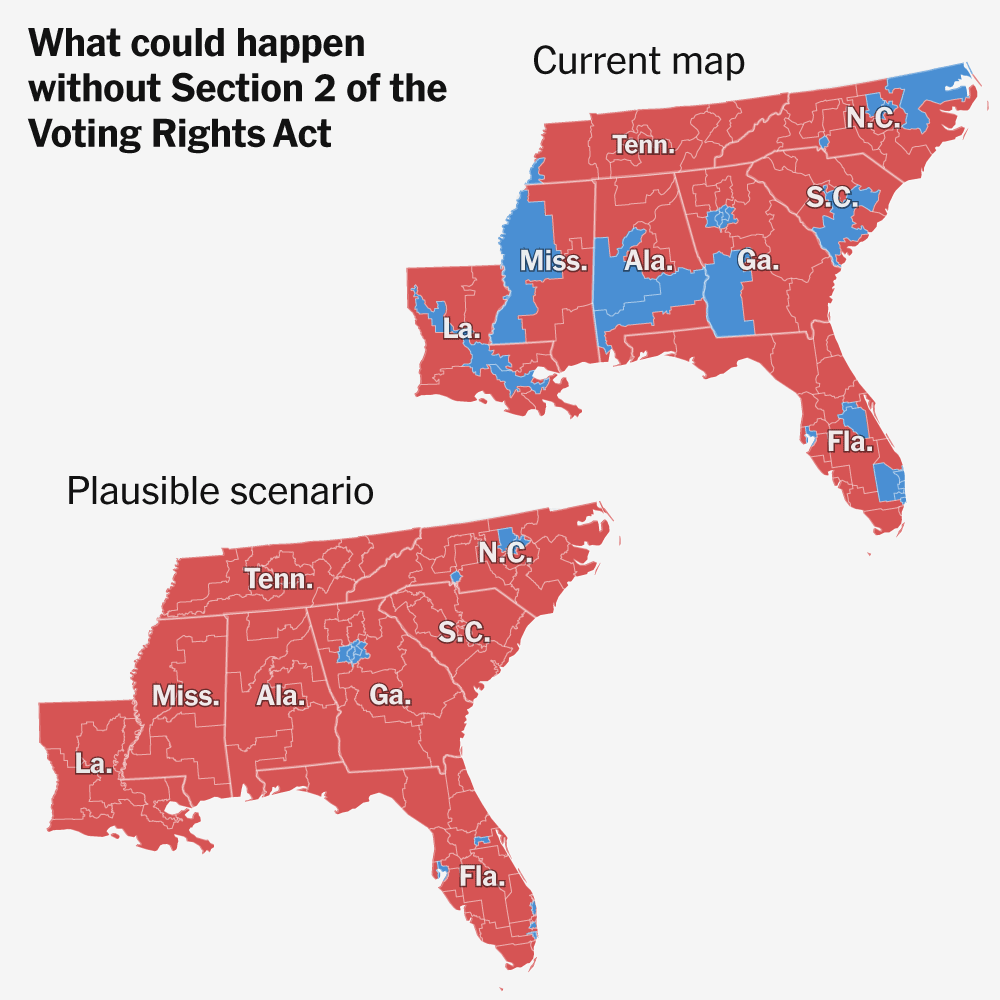
However, the need for a ban remains urgent. Republicans already hold over a dozen seats they do not deserve, and the Supreme Court could make it dramatically worse. Any day now, the conservative justices are widely expected to gut Section 2 of the Voting Rights Act in Louisiana v. Callais, with prediction markets putting the odds at 90.8%.
The consequences would be devastating. Up to 19 House seats could be gerrymandered red through minority vote dilution. Nearly a third of the Congressional Black Caucus and 11 percent of the Congressional Hispanic Caucus could be drawn out of existence. In 10 Southern states, majority-minority state legislative districts could collapse from 342 to 202.
The Solution
(1) The Redistricting Reform Act
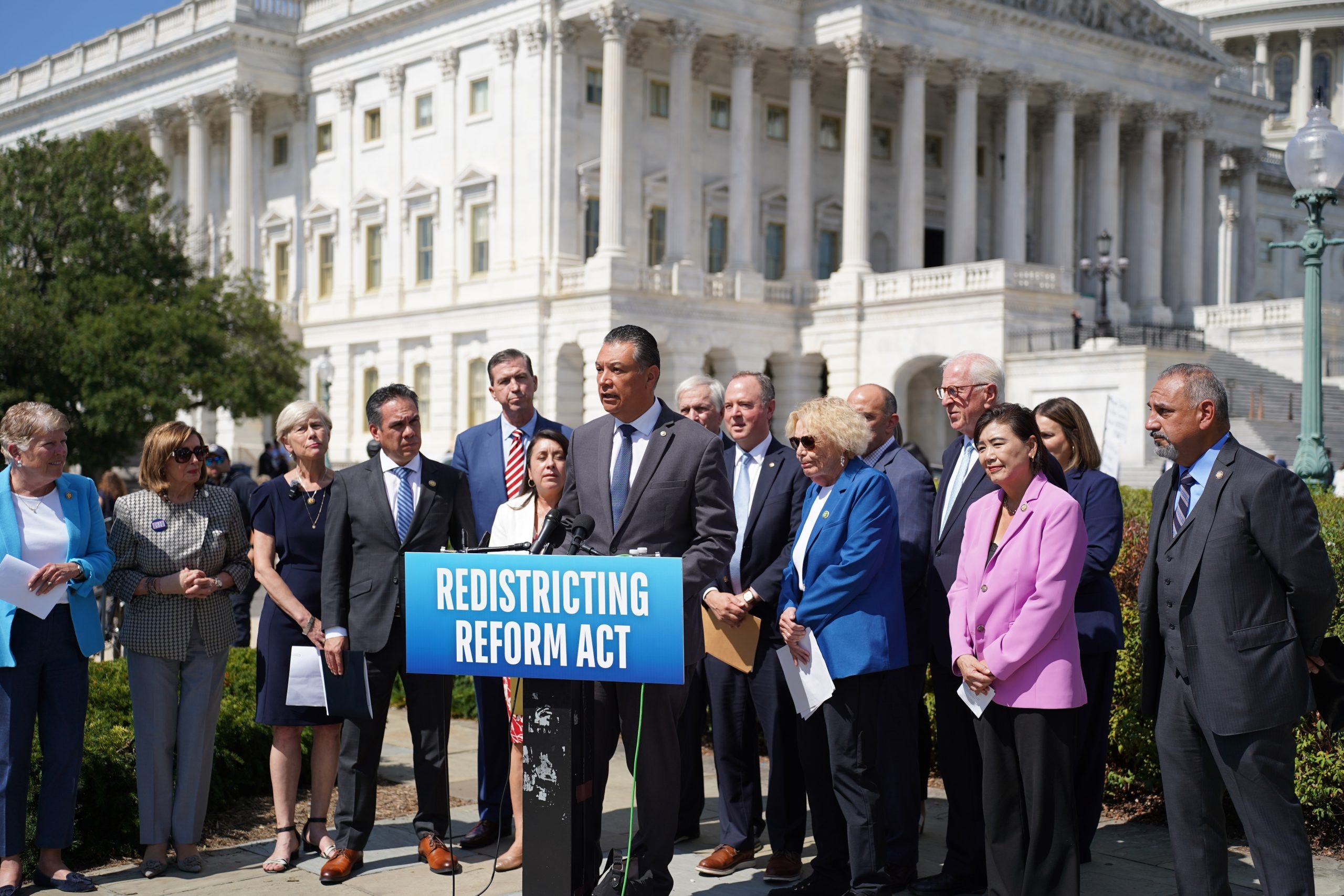
Here is the good news. Congress has the power to end gerrymandering for good, and Democrats are getting to work on exactly that. Rep. Zoe Lofgren of California has introduced the Redistricting Reform Act, which would ban mid-decade redistricting nationwide and require every state to establish an independent redistricting commission.
Each commission would have 15 members: 5 from the majority party, 5 from the minority party, and 5 independents, all required to reflect the demographics and regions of their state. Partisan gerrymandering would be explicitly prohibited.
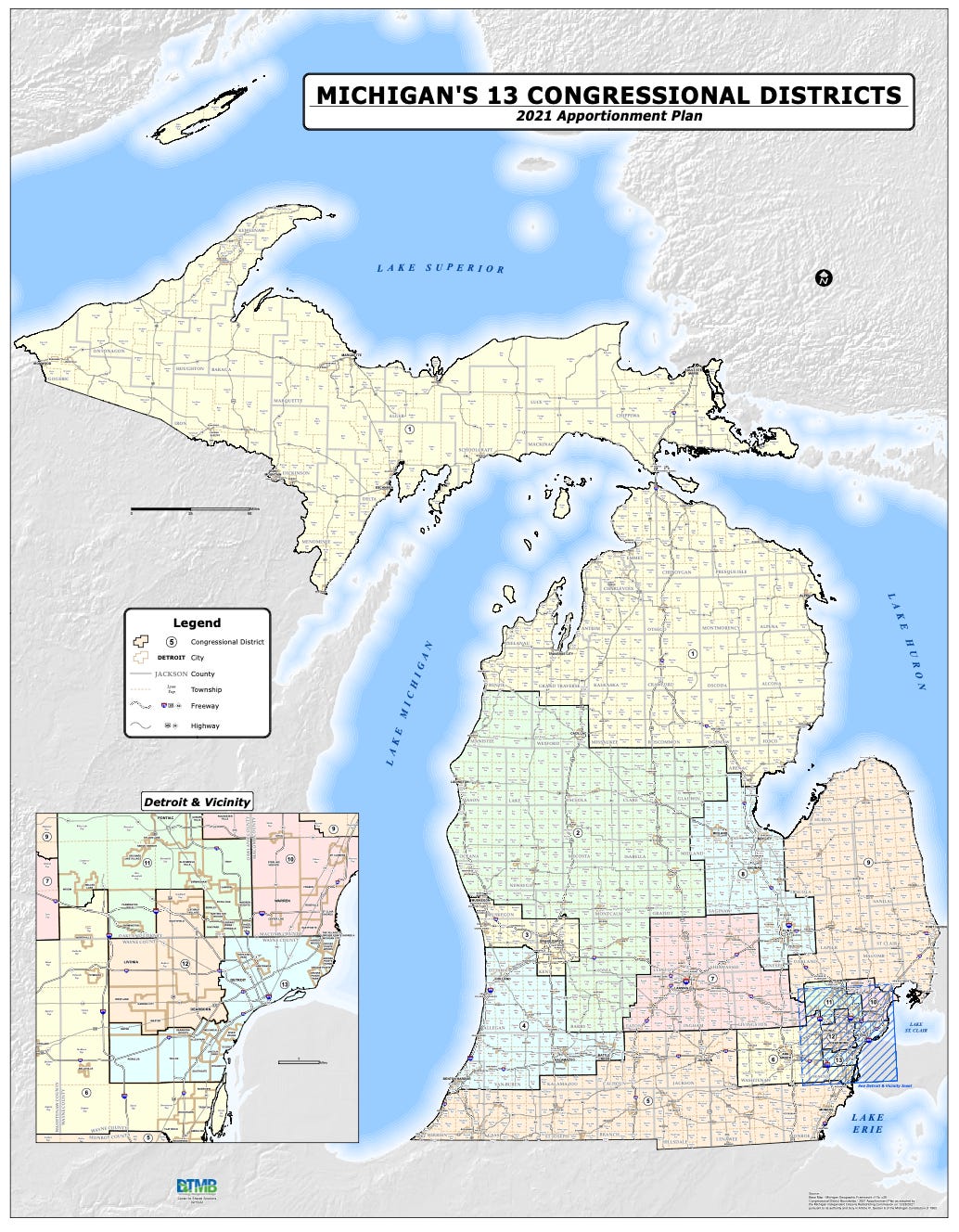
We know this works. After Michigan voters approved an independent commission in 2018, the maps drawn for the 2022 cycle were the most balanced the state had seen in half a century, with no significant advantage to either party. All registered voters were eligible to serve, public meetings were required, and legislators were kept out entirely.
(2) Banning Gerrymandering
Congress could also give courts the tools to strike down partisan gerrymanders directly. Right now they have no standard to apply. That can be fixed.
One of the most powerful measures ever proposed is the efficiency gap, developed by professors Nicholas Stephanopoulos and Eric McGhie. The concept is straightforward; every vote cast for a losing candidate is a wasted vote, along with every extra vote cast for a winner beyond what they needed to win. Gerrymanders work by forcing the opposing party to waste as many votes as possible. The efficiency gap measures exactly that.
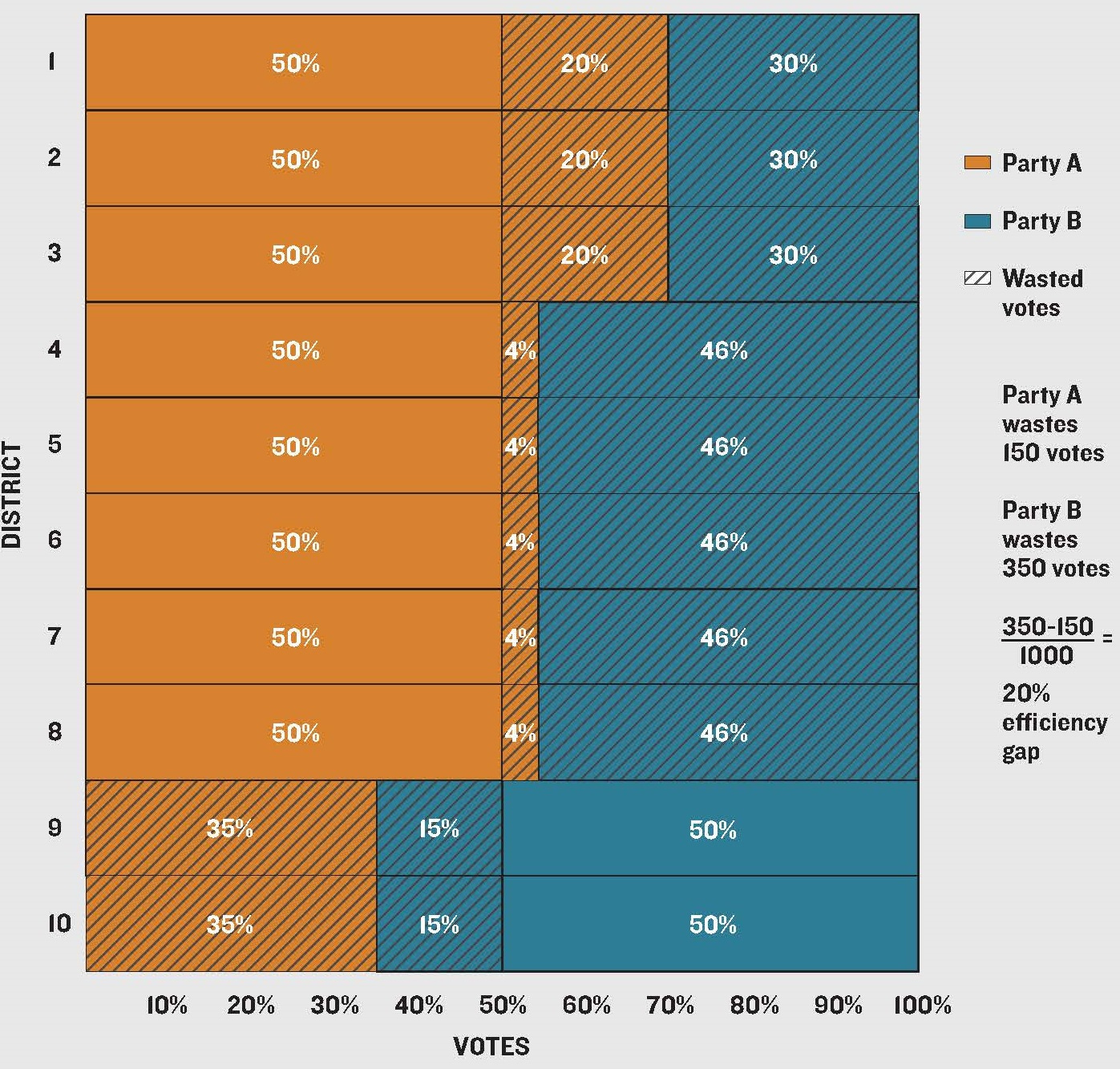
Here is how the math works. Take a county with 10 districts and 1,000 total votes. Republicans win 8 districts, Democrats win 2. When you add up every wasted vote, Democrats wasted 350 while Republicans wasted only 150.
Efficiency gap = (350 - 150) / 1,000 = 20%
A gap that large is a strong signal of a Republican gerrymander. Stephanopoulos and McGhie propose an 8% threshold. Any map that exceeds it would be presumptively illegal. Congress could write that standard into law tomorrow.
Despite every solution on the table, Republicans have not lifted a finger. The Redistricting Reform Act has been collecting dust in the Republican-controlled House Judiciary Committee since last September, while over 50 Democrats have signed on as cosponsors.
This is not new. Republicans blocked the Freedom to Vote Act, which would have eliminated partisan gerrymandering, in both 2019 and 2021. Both times, Democrats voted overwhelmingly to pass it. Both times, Republicans killed it.
75% of Americans said partisan gerrymandering was a major problem in 2025. Democrats are with the public. Republicans are not.
Republicans can block these bills today. But when Democrats take back power, this is first on the agenda. The maps will be fair. The votes will count. And the era of rigged districts will be over.
That day can’t come soon enough.
I am here for it! 👏👏👏👏👏
Ultimately a constitutional amendment is the only foolproof way to eliminate gerrymandering. If for no other reason, it's an incentive to making control of legislatures a high priority for Dems.
We could use a series of constitutional amendments like those in the 1860s to strengthen democracy. Forcing Congress to fulfill its role as a co-equal branch of government should be a priority.