

BREAKING: U.S. Sailors Are Trying to JUMP Overboard Due To Bad Iran War Conditions

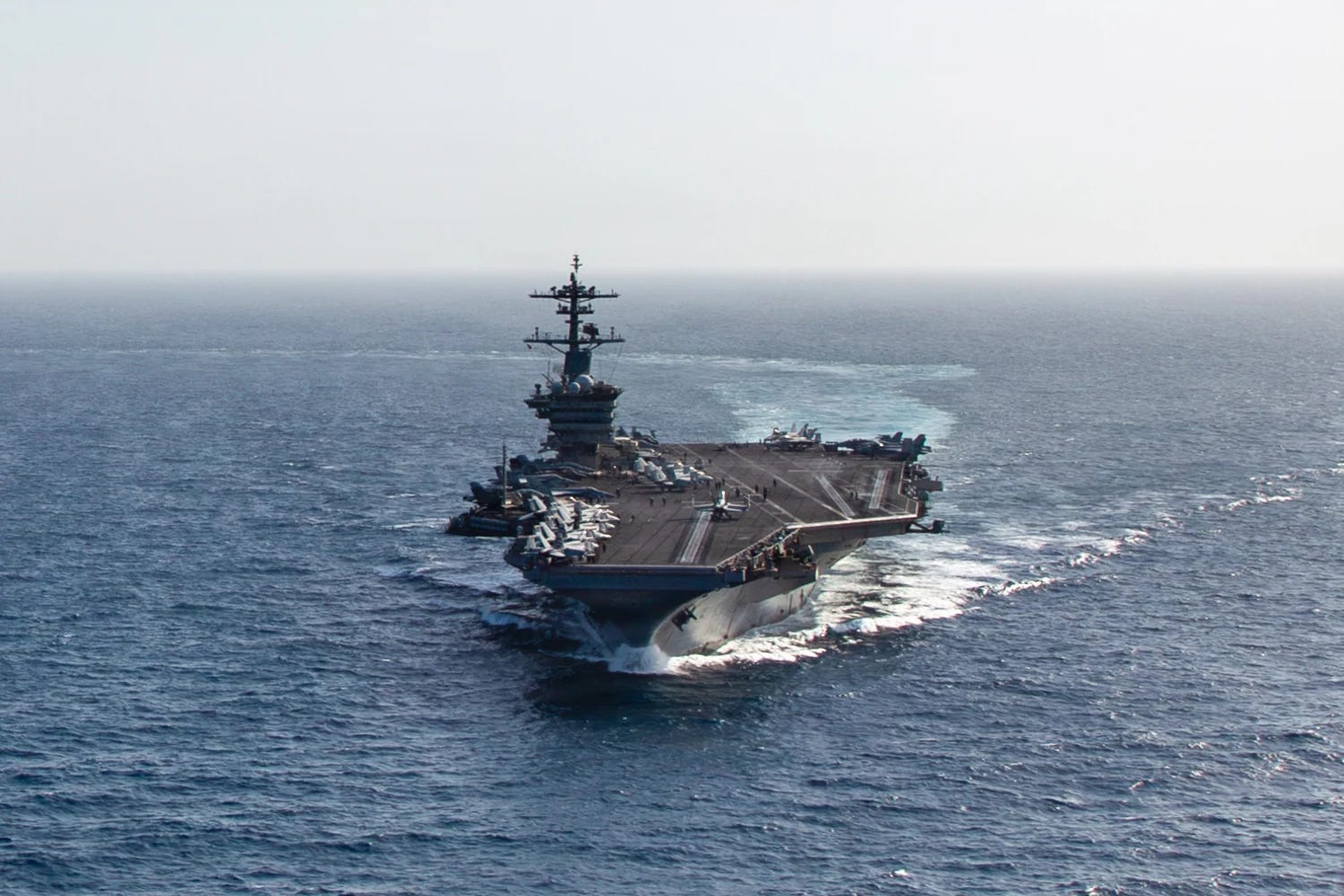
Thousands of U.S. Navy sailors have been trapped at sea for more than 250 days because of a war the Trump administration chose to fight. They’re losing dozens of pounds, going weeks without clean laundry, and eating half a cup of rice for dinner. Some have tried to jump overboard. Pete Hegseth’s response was to call it “completely misrepresented.”
The USS Abraham Lincoln left California in November on what was supposed to be a routine deployment to the South China Sea. Then the Trump administration redirected it to the Middle East ahead of US attacks on Iran in February, and the ship’s roughly 5,000 sailors have effectively been stuck there ever since.
A War That Keeps Extending Their Sentence
The deployment was originally supposed to end in May. Instead, it’s been extended again and again, with the Iran conflict as the driving reason the Pentagon keeps giving. There is still no announced return date. The only movement reported this week is that the Navy is preparing to eventually swap in the USS George Washington, as part of a rotation that was already scheduled, not as any kind of relief tied to how badly things have deteriorated aboard the Lincoln.
That’s the trade the administration made: a longer war in the Middle East, paid for in part by sailors who didn’t get a vote on any of it and now can’t get off the ship.

What Living Through That Looks Like
The Military Times and Stars and Stripes reported this week that multiple sailors have considered jumping overboard, according to interviews with their families. CBS News, the BBC’s US partner, reported that a sailor actually did go overboard earlier this month, was pulled out by helicopter, treated onboard, and then moved off the ship for further care. That’s now under investigation.
One family member told the BBC that their relative aboard the Lincoln has lost 65 pounds since the deployment started. Speaking anonymously out of fear of retaliation, they described a recent message from their loved one: “I’m dead tired. Dead.” They described nonstop noise and vibration from engines and aircraft, no real break, ever.
“It’s not a vacation. And he knows what he has to do,” the relative said. “But it’s just without a port, without stepping foot on lands, without any kind of decompression. It’s a constant vibration. Morning, noon, and night when you sleep, when you eat, when you shower. There’s never a moment of peace in your mind.”
California Congressman Mike Levin laid out the conditions bluntly: moldy showers, broken toilets, laundry backed up for weeks, long stretches with no hot water, and dinner reduced to half a cup of rice and two tortillas. No soap. No deodorant. No toothpaste. This is what an extended war footing looks like for the people actually living it, while the administration insists everything is fine.
Democrats Are Demanding Accountability
Connecticut Senator Richard Blumenthal sent Defense Secretary Pete Hegseth a letter listing the reported conditions: supply shortages, water contamination, plumbing failures, deteriorating mental health, deck safety concerns, and a mail system so broken that care packages have been lost for months. “These reports warrant immediate attention,” he wrote, “but they also raise a broader question: whether the Navy can sustain the operational tempo now being demanded of its carrier force.”
Arizona Senator Ruben Gallego went further, demanding Congress be let onto the ship to see conditions firsthand. “There is no reason to be denied access,” he wrote.
Hegseth’s answer was to dismiss the reporting outright, calling it “completely misrepresented” while speaking to reporters in Panama, and framing the sailors’ suffering as simply the cost of “austere conditions with less port calls.” A Navy official separately denied any rise in reported suicidal ideation aboard the ship and blamed supply disruptions on “combat actions,” the same war the administration chose to extend this deployment for in the first place. The White House’s response was a vague line about being “committed” to giving the military “the resources necessary.”
Notice what’s missing from any of those responses: an actual return date, or an acknowledgment that eight months at sea during a war of choice might be the actual problem.

No One in Washington Has Given These Sailors a Timeline
Congress still hasn’t been granted access to the ship despite Gallego’s request. The investigation into the sailor who went overboard is still open. And the Lincoln is still out there past the 250-day mark, with sailors and their families left to wonder how much longer a war that was supposed to be swift and decisive is going to keep them away from home.
The administration got its war with Iran. The bill for it is currently being paid by 5,000 servicemembers who can’t leave the ship.
If you or someone you know is struggling, the US Suicide and Crisis Lifeline can be reached by calling or texting 988.