


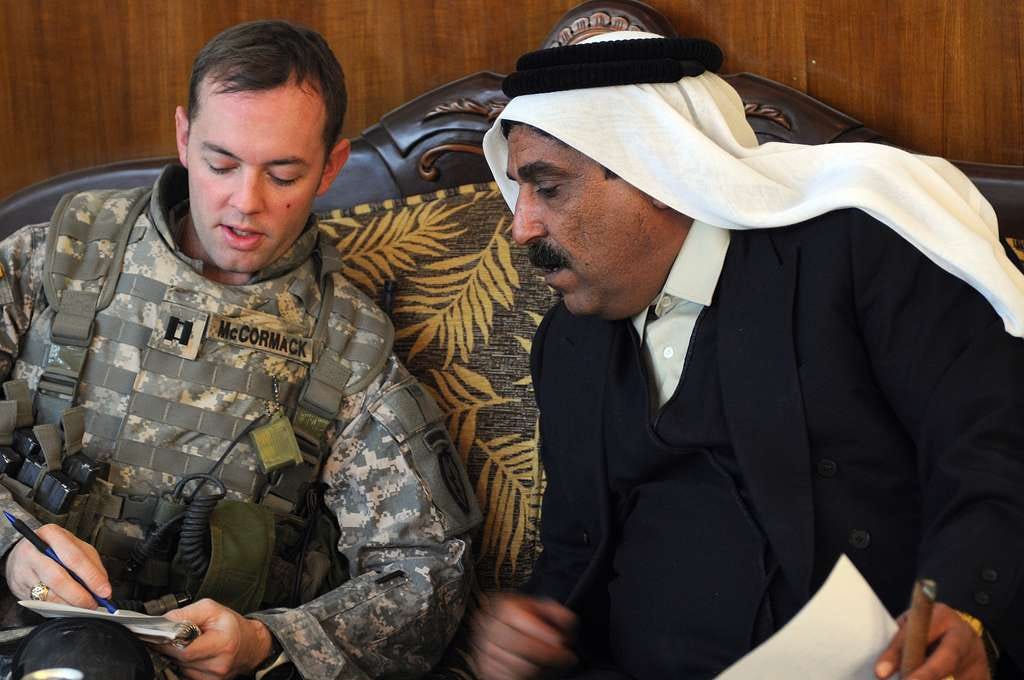
Col. Nathan McCormack, the Levant and Egypt branch chief at the Joint Chiefs of Staff’s J5 planning directorate, was removed from the Joint Staff and made the subject of a Pentagon investigation on June 17, 2025, just hours after JNS reported that he had long posted anti-Israel statements on a semi-anonymous public social media account.
The response from the Pentagon was fast. JNS’s initial story broke the existence of the account and its contents. Within the same news cycle, a Joint Staff official confirmed to JNS that the department was already reviewing the matter and had begun the process of removing McCormack from his post. This turnaround left little daylight between the report and the institutional response.
What a Pentagon Official Told JNS
A Joint Staff official told JNS the Pentagon was “aware of the situation” and “looking into the matter” within hours of the initial report going live. Asked directly about the account’s content, the official didn’t hedge: “The information on the X account does not reflect the position of the Joint Staff or the Department of Defense.”
The official then laid out what would actually happen to McCormack: “The individual is being returned to his service while the matter is being investigated.” Pressed on what that meant in plain terms, the official clarified: “He will no longer be on the joint staff while the matter is being investigated.” That’s a specific personnel action, sending him back to the Army, the branch he came from, rather than a court-martial or termination, at least based on what’s been said publicly so far.
The Pentagon also described its process: “We went through and looked at the hyperlinks and the content, so we were able to see the content, and we’re essentially assigning an investigating officer to look into the matter,” the official said, adding, “Our global alliances and partnerships are vital to our national security, enhancing our collective defense, deterrence and operational reach.” The account itself was disabled around the same time, shortly before the Pentagon confirmed the investigation, though JNS’s reporting doesn’t specify whether McCormack deactivated it himself.
What McCormack’s Posts Said
JNS’s report identifies several specific statements from the archived posts that formed the basis of its story. McCormack referred to “Netanyahu and his Judeo-supremacist cronies,” a phrase that goes into overtly inflammatory territory. He also wrote that Washington had “overwhelmingly” enabled Israel’s “bad behavior,” framing decades of U.S. foreign policy as complicity rather than routine alliance management.
Separately, McCormack argued that pro-Israel activists in the United States prioritize “support for Israel over our actual foreign interests.” Elsewhere, McCormack had described Israel as America's "worst ally," writing that the relationship, and the enmity in the region it produced, wasn't worth what the United States got in return.
How Colleagues Reacted
JNS spoke with a Defense Department contractor who had personally interacted with McCormack in a professional capacity. That contractor didn’t mince words in assessing what the posts meant for someone in his specific role: “This is the kind of bitter oversharing I’d expect from someone who doesn’t know better. But at his level and under his own name and likeness? It’s mind-boggling.”
That reaction points to two issues layered on top of each other. First, that the posts themselves were viewed internally as inflammatory rather than measured criticism. Second, and arguably more significant to how the Pentagon ultimately responded, that McCormack made these statements under his real identity while holding a specific, sensitive advisory role on the exact country he was criticizing. The contractor’s framing suggests it was that combination, not the political content on its own, that struck people close to the situation as remarkable enough to flag.

Who McCormack Is
McCormack’s role as Levant and Egypt branch chief placed him within the J5 directorate, the part of the Joint Chiefs of Staff responsible for advising the Chairman on military strategy, planning, and policy, including preparing senior leadership for engagement with partner nations such as Israel. It’s a role built around managing and interpreting a bilateral relationship at a strategic level, not simply holding personal views about it.
Photos accompanying JNS’s report document McCormack’s earlier military career: as a U.S. Army captain from Dallas, Texas, he’s shown in December 2008 meeting with a local sheikh in Al Butoma, Iraq, as part of counterinsurgency and local governance efforts during that stage of the Iraq War, alongside his party coordinator at the time. That earlier posting suggests a career built substantially around exactly the kind of on-the-ground diplomatic and cultural liaison work his later Pentagon role would have called on him to manage at a higher level.
Where Things Stand
As of JNS’s report, McCormack had been reassigned away from the Joint Staff and returned to his Army service branch while the Pentagon’s investigation proceeds. No timeline for how long that investigation might take, and no indication of what disciplinary outcome, if any, might ultimately follow, had been announced by the Pentagon at the time of publication. The case remains open, with McCormack’s account disabled and his advisory role on Israel-related matters vacated in the meantime.